How to Cruise the Rhine Without a Cruise Ship
The famous Rhine cruise route works surprisingly well without a cruise ship
Castles, wine towns, river legends, hidden villages, and scenic rail lines are all still there. The buffet schedule and mandatory return to the ship are not.
A Rhine River cruise sounds wonderfully simple. Board the ship, unpack once, watch castles drift past, and allow someone else to worry about transportation. It is a good formula, but it is not the only way to experience the route. Trains follow much of the river, stopping in towns that cruise passengers often see only from the water. With a rail pass, a sensible bag, and a willingness to point at the correct platform sign, travelers can build their own river cruise by train.
Weird Rhine River Cruise by Train follows the famous journey from Amsterdam toward Basel using rail connections instead of a cruise cabin. The route includes Cologne, Koblenz, Rüdesheim, Mainz, Strasbourg, and other memorable stops. It combines practical planning with castles, legends, unusual history, hidden villages, and the small surprises that make independent travel worth the occasional sprint through a station.
The train stays remarkably close to the river
Along the Middle Rhine, rail lines run beside the water for long stretches. Castle ruins appear above vineyards, cargo boats move steadily through the current, and compact towns gather around church towers and old walls. On the right stretch of track, the view feels like a river cruise with better access to snacks and fewer announcements about the evening dress code.
The two banks offer different views, and travelers can cross the river by ferry in several towns. This creates useful choices. One day can focus on castles and overlooks. Another can include wine villages, riverside walks, or a short boat ride. Traveling by train does not mean rejecting the river. It means using the river as the spine of a flexible land journey.
Castles become stops instead of scenery
A ship offers an excellent view of Rhine castles, but the train makes it easier to get off and investigate. Marksburg Castle rises above Braubach and remains one of the great medieval strongholds of the region. Rheinfels overlooks St. Goar with ruins large enough to reward wandering. Across the water, Katz and Maus castles add names that sound as if medieval nobles were secretly writing cartoons.
The Rhine’s castle density reflects centuries of toll collection, political fragmentation, trade, and rivalry. Lords controlled narrow stretches of river and charged passing traffic. A beautiful valley became a complicated chain of checkpoints, fortresses, and ambitious people demanding payment. Modern travelers mostly pay for coffee and museum admission, which is an improvement.
The Lorelei is still waiting by the bend
Near St. Goarshausen, the river narrows and curves beneath the Lorelei rock. Strong currents and dangerous conditions contributed to accidents, while legend supplied a mysterious woman whose beauty and song distracted sailors. The story became one of the Rhine’s most famous myths through poetry, music, tourism, and generations of creative embellishment.
Whether approached as folklore, literary history, or a dramatic excuse to stare at a cliff, the Lorelei gives the valley a sense of theater. The trains pass close to the site, and local viewpoints provide a chance to slow down and understand why this bend became much larger in the imagination than it appears on a map.
Small towns are the great advantage
Independent rail travel makes room for places that do not require a full day. Bacharach has timber-framed buildings, old walls, riverside paths, and enough medieval atmosphere to make a modern suitcase look suspicious. Oberwesel offers towers, vineyards, and walks above the river. Rüdesheim adds wine taverns, mechanical music, and a famous narrow lane that can become extremely lively.
The trick is not to collect every town like refrigerator magnets. Choose a few, stay long enough to enjoy them, and leave space for an unexpected ferry, ruined tower, bakery window, or local festival. The Rhine rewards travelers who resist turning the journey into an endurance event.
Freedom comes with a timetable
A DIY Rhine trip costs less than many cruises and provides control over the pace, but it does require planning. Travelers must watch schedules, select hotels, handle luggage, and recognize that a short platform change can become an athletic event when elevators are involved. Packing lightly improves almost everything.
The reward is flexibility. Stay longer in a favorite town, take an evening walk after day-trippers leave, eat where locals eat, and change the plan when the weather improves. The book explains how to connect the major stops while keeping the experience practical and enjoyable. For more train-friendly adventures, visit the Weird Europe series.
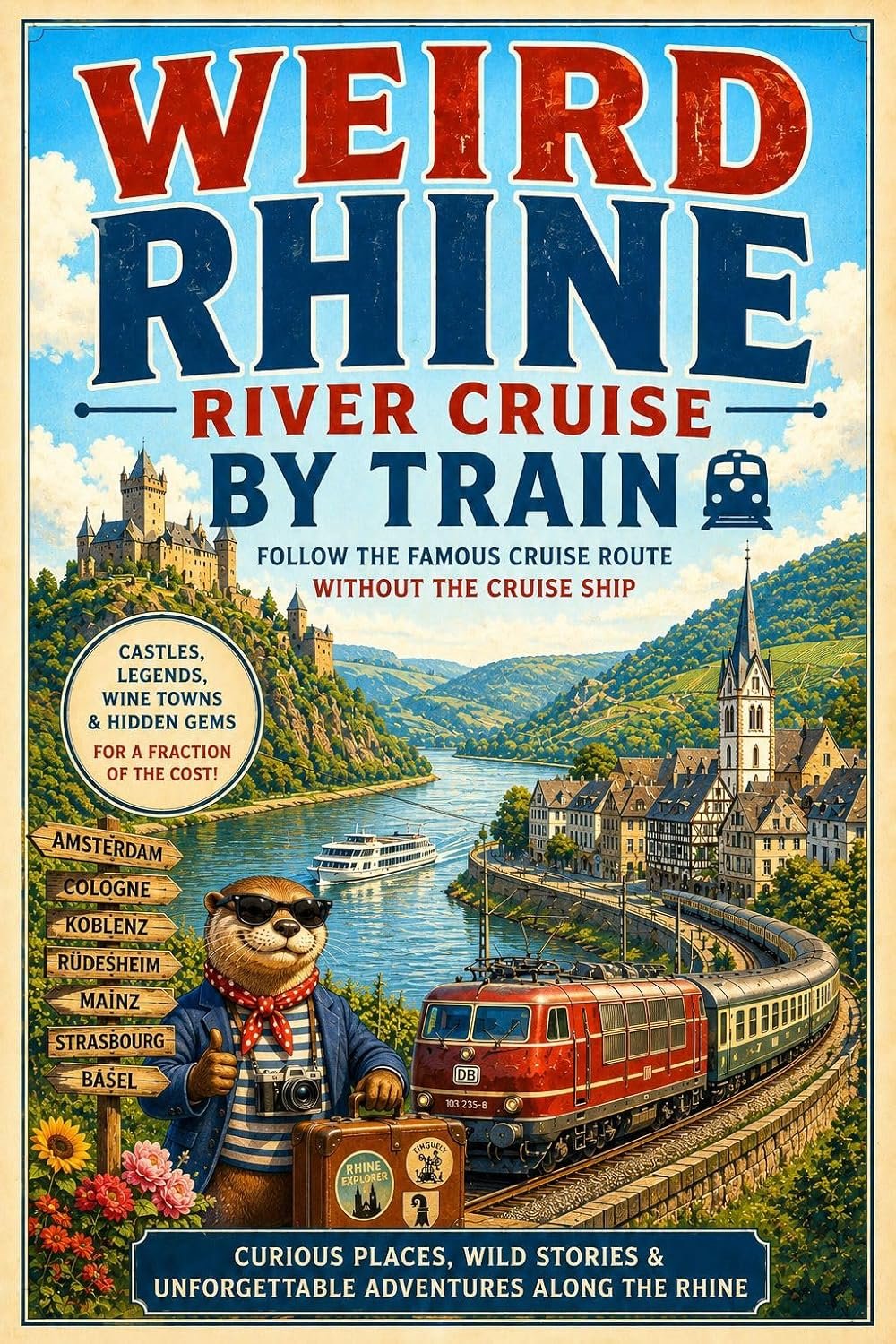
Build your own Rhine adventure
Follow the famous cruise route by train through castles, legends, wine towns, hidden villages, and unforgettable river scenery.
View on Amazon