The Smokies Have Bear Jams, Ghost Towns, and a Road to Nowhere
SparkTrail Weird America Travel
Haunted roads, moonshine hollers, ghost towns, bear jams, Cherokee legends, and foggy mountain mayhem.
The Great Smoky Mountains look peaceful from a distance. Blue ridges fade into mist, forests roll toward the horizon, and every overlook appears ready to sell a million calendars. Then a black bear crosses the road, twenty cars stop at once, somebody abandons common sense for a photograph, and the famous mountain calm becomes a bear jam.
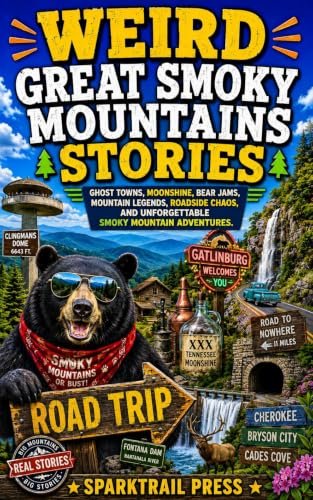
Weird Great Smoky Mountains Stories explores the park beyond the postcard view. The Smokies contain vanished communities, moonshine legends, old cemeteries, Cherokee history, abandoned resort cabins, a tunnel leading to nowhere, and enough fog to make every ordinary tree stump briefly suspicious.
October Arrives With Color and Company
October is the park’s busiest month, and the leaves change according to elevation rather than anybody’s vacation schedule. High country color usually develops from early to mid October. Lower and middle elevations often reach their brightest period from mid October into early November. Nature provides the show but refuses to guarantee the curtain time.
Buy and print a parking tag before arriving if possible. Keep a second destination in mind because popular lots fill early. Start before breakfast or explore quieter areas while everyone else is negotiating the same overlook. Primary routes such as Newfound Gap Road, Little River Road, and Cades Cove Loop Road stay open throughout the year when weather permits, but temporary closures can still rearrange a perfect plan.
Kuwohi Is More Than a View
The park’s highest point is Kuwohi, the mountain long called Clingmans Dome. The Cherokee name was officially restored in 2024, returning attention to the mountain’s deep significance for the Cherokee people. The road and observation tower offer enormous views when clouds cooperate. When they do not, visitors receive an immersive demonstration of why these mountains are called smoky.
The walk to the tower is short but steep enough to expose every optimistic snack choice made earlier that day. Bring a layer because the high country can feel far cooler than Gatlinburg or Cherokee. Parking fills quickly, so an early arrival and a backup viewpoint are acts of wisdom, not defeat.
Cades Cove and the Great Bear Traffic Jam
Cades Cove is an eleven mile one way loop through a broad valley filled with historic homesites, churches, cemeteries, trails, and wildlife. It is beautiful, accessible, and occasionally slower than a parade organized by turtles. The 2026 vehicle free Wednesday season ended September 30, so drivers should expect motor traffic every day for the remainder of the year.
Bears are the celebrities here, but they are not posing for you. Park rules require visitors to remain at least 50 yards from black bears and farther away if an animal changes its behavior. Stay in the vehicle when watching from the road, use a zoom lens, and never create a traffic emergency because a bear has successfully located a berry.
Elkmont Refuses to Disappear
Elkmont began as a logging community and later became a mountain resort where wealthy vacationers built cottages around the Appalachian Club and Wonderland Hotel. When the national park was created, leases eventually expired and many structures stood empty. Trees, weather, and rumor did the rest, giving Elkmont a reputation as a ghost town.
The truth is more interesting than the usual haunted cabin story. The National Park Service preserves eighteen Appalachian Club cabins, while stone walls and chimneys mark other lost buildings along nearby trails. Walk the Daisy Town area and Jakes Creek Trail in daylight, respect closed structures, and let the empty fireplaces do the storytelling.
A Road That Reached a Tunnel and Gave Up
Near Bryson City, Lakeview Drive ends at a long tunnel commonly called the Road to Nowhere. The road was tied to a promise made after Fontana Dam flooded an older route and isolated family cemeteries. Construction continued in pieces, environmental concerns grew, costs mounted, and the promised road was never completed.
Today the 1,200 foot tunnel is closed to vehicles but serves as a gateway to trails and backcountry sites. Carry a flashlight if walking through it. The middle becomes properly dark, which is delightful for atmosphere and less delightful for discovering how much imagination can accomplish with dripping water.
Moonshine Was a Business Plan
Remote hollers, corn crops, taxes, and economic necessity helped create the region’s moonshine reputation. Illegal distilling was not merely a collection of comic characters hiding jars from bumbling agents. It involved skill, family networks, risk, violence, and a long contest between mountain communities and government revenue officers.
The stories survive in old still sites, local museums, legal distilleries, songs, and tales that improve every time they are repeated. Treat claims about secret recipes and impossible escapes with cheerful caution. A moonshiner who outran six agents, crossed a flooded river, and never spilled a jar may be historical. He may also have benefited from several decades of editorial assistance.
The Mountains Were Never Empty
The Smokies are often described as wilderness, but people have lived in and around these mountains for thousands of years. Cherokee history is not a decorative preface to the park. It is central to the landscape, place names, stories, plants, trails, and communities that remain on the North Carolina side.
The park also preserves more than seventy historic log buildings left by later mountain communities. Cabins, mills, churches, barns, and schools reveal ordinary lives that tourism often flattens into costumes and jokes. Visit with curiosity. These buildings were homes before they became scenic stops.
Build a Trip That Can Bend
Choose one major area per half day instead of trying to collect the entire park before dinner. Combine Cades Cove with Townsend, Kuwohi with Newfound Gap, or Elkmont with Little River Road. Download maps before entering areas with weak service, carry water and layers, and check current road and trail conditions each morning.
The best Smokies plan leaves room for fog, wildlife, traffic, sudden weather, and an unplanned walk beside a stream. Efficiency is useful. Flexibility is what keeps a crowded overlook, a closed road, or one extremely confident bear from owning the whole day.
Take the Weird Road Through the Smokies
Weird Great Smoky Mountains Stories by SparkTrail Press and Guy Wann guides curious travelers through the park’s natural wonders, human history, strange legends, and practical complications. Explore more American oddities in the SparkTrail Weird America Travel series, or browse the complete SparkTrail Press book catalog.
Choose your Smoky Mountains adventure