Why Yellowstone Is Weirder Than You Think
America’s first national park has never been normal
Yellowstone is famous for geysers, bison, and scenery that can make a camera feel inadequate. Look closer, and the park becomes much stranger.
Yellowstone looks respectable in the travel brochures. Old Faithful erupts on schedule, bison pose beside the road, and mountain views behave exactly as mountain views are expected to behave. Then the traffic stops because a buffalo has decided to inspect a rental car, steam rises from a suspiciously colorful hole in the ground, and somebody mentions that an enormous volcanic system is sleeping beneath everyone’s hiking boots.
Geysers are only the beginning
Yellowstone contains one of the planet’s greatest concentrations of geothermal features. The landscape bubbles, hisses, steams, splashes, and occasionally smells as if the earth has been experimenting with hard-boiled eggs. Old Faithful gets most of the attention, but the park is crowded with mud pots, hot springs, fumaroles, and lesser-known geysers that seem determined to prove geology has a theatrical streak.
The colors can be just as surprising as the eruptions. Brilliant blues, yellows, oranges, and greens are created by a combination of minerals, extreme temperatures, and heat-loving microorganisms. The result looks artificial, which is especially unsettling when a wooden boardwalk is the only thing separating visitors from water hot enough to ruin far more than a vacation.
Wildlife does not follow visitor etiquette
Bison jams are one of Yellowstone’s most memorable traffic problems. A full-grown bison can weigh roughly a ton, move much faster than its bulky appearance suggests, and display absolutely no interest in anyone’s sightseeing schedule. Bears, elk, wolves, ravens, and other animals add their own unpredictable behavior to the trip.
The safest Yellowstone stories are the ones told from a respectful distance. The park is not a petting zoo, even when an animal looks calm, photogenic, or vaguely interested in social media. The wildlife is wild, and that is exactly what makes seeing it unforgettable.
History left plenty of strange tracks
Long before Yellowstone became a national park, Indigenous peoples traveled through, lived in, and understood this landscape. Later explorers returned with stories that sounded so exaggerated that audiences sometimes dismissed them. Once official expeditions confirmed the geysers, hot springs, canyons, and other wonders, the area became a national park in 1872.
The years that followed brought stagecoaches, grand hotels, unusual tourist traditions, early wildlife controversies, and enough roadside history to fill several glove compartments. Add local legends, ghost stories, eccentric visitors, and nearby mountain towns, and Yellowstone becomes far more than a checklist of scenic overlooks.
The best road trips leave room for the unexpected
A Yellowstone trip works best when the schedule has breathing room. Roads can close, weather can change quickly, wildlife can appear anywhere, and a planned twenty-minute stop can easily become an hour. The strange moments are often the ones travelers remember most, whether it is a raven behaving like a professional thief or an unexpected burst of steam rising beside the road.
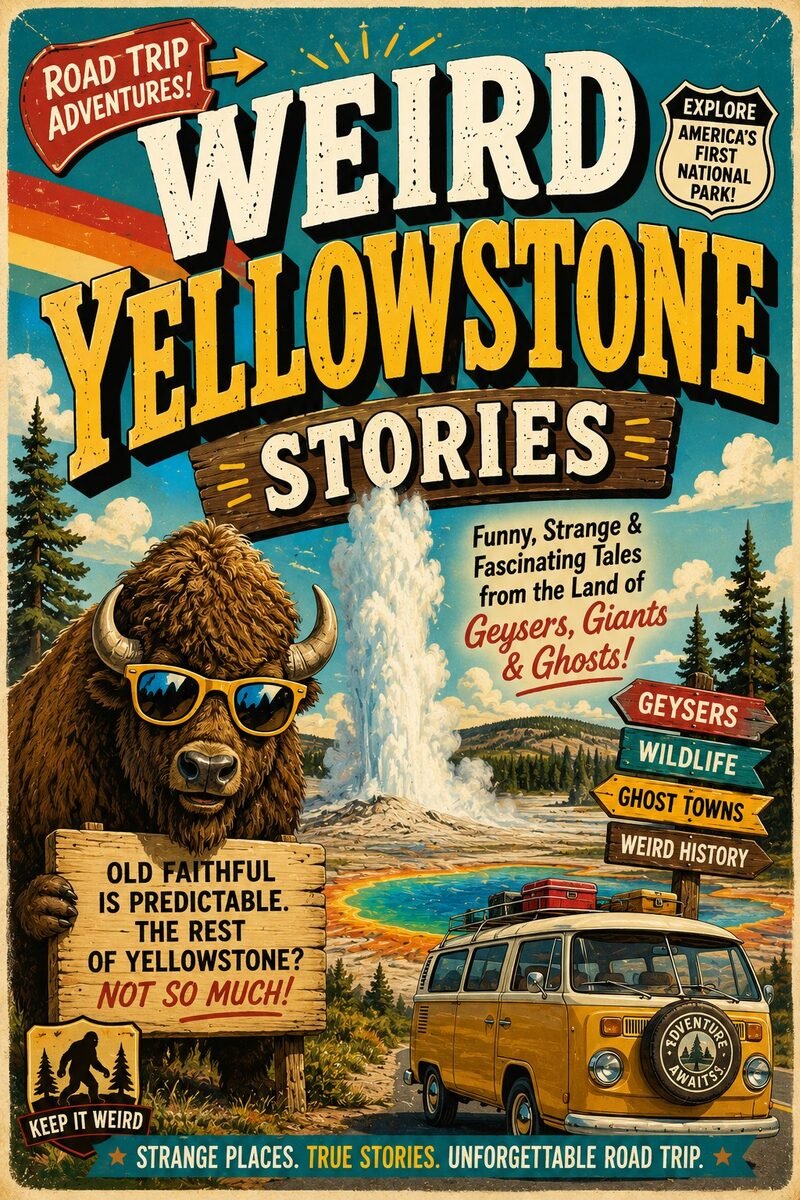
Weird Yellowstone Stories was created for readers who want the scenery and the stories behind it. It explores geysers, wildlife, ghost towns, odd history, legends, road trip surprises, and the peculiar details that make America’s first national park impossible to forget.
Ready for a stranger Yellowstone road trip?
Discover funny, strange, and fascinating tales from the land of geysers, giants, and ghosts.
View on Amazon