Thanksgiving Had Venison, Runaway Balloons, and Two Different Thursdays
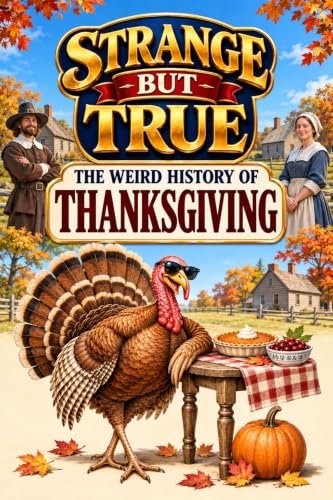
Thanksgiving presents itself as a calm holiday devoted to gratitude, family, and roast turkey. Then the parade balloons escape, the football begins, somebody burns the rolls, and three relatives discover they have been assigned the same chair.
Strange But True: The Weird History of Thanksgiving looks past the polished table and into the wonderfully untidy history behind the holiday. The story includes a three-day harvest gathering, missing menu items, determined editors, costumed children, zoo animals, airborne cartoon characters, calendar confusion, frozen dinners, and turkeys receiving mercy for unexplained crimes.
The Famous 1621 Meal Left a Very Short Grocery List
The gathering now associated with the first Thanksgiving took place at Plymouth in 1621 and lasted three days. More than fifty English colonists survived the settlement’s devastating first year. Ousamequin, also known as Massasoit, arrived with about ninety Wampanoag men. The event involved food, diplomacy, recreation, and enough people to make seating arrangements somebody else’s problem.
Only two foods are clearly named in the surviving eyewitness account: wildfowl and venison. The Wampanoag brought five deer, while English hunters supplied birds. Turkey may have appeared because wild turkeys were present in the region, but the document does not place one dramatically in the center of the table.
Seafood, corn, squash, beans, nuts, and seasonal plants were available and may have been served. Mashed potatoes, sweet potatoes, cranberry sauce, and pumpkin pie were not the familiar dishes we know today. Sugar was limited, ovens were not ready to produce a modern pie parade, and forks were absent. Anyone demanding marshmallows on the sweet potatoes would have needed to invent several industries first.
The Holiday Took Centuries to Become Official
Days of thanksgiving occurred in different colonies, states, communities, and religious traditions long before the United States settled on one national date. They did not all refer to Plymouth, and they did not necessarily include turkey, football, or a retail sale beginning before dessert.
Magazine editor Sarah Josepha Hale spent years promoting a shared national Thanksgiving. She published recipes, wrote editorials, and contacted public officials with the persistence of a person who had already decided the menu and was waiting for the country to confirm attendance.
In 1863, Abraham Lincoln proclaimed a national Thanksgiving for the last Thursday of November. Annual proclamations followed, but even that did not permanently settle the calendar. America had achieved a national holiday while leaving itself one future argument about which Thursday counted.
In 1939, Thanksgiving Happened Twice
November 1939 had five Thursdays. President Franklin Roosevelt moved the federal observance forward by one week, hoping to lengthen the Christmas shopping season. Some states followed the new date. Others kept the traditional final Thursday. Texas and Colorado recognized both, apparently deciding that the safest answer was two dinners.
The confusion disrupted travel plans, school calendars, football schedules, and families who now had to determine whether grandmother followed federal guidance. Critics called the earlier date “Franksgiving.” In 1941, federal law established Thanksgiving as the fourth Thursday in November, ending the dispute before anyone proposed a rotating turkey calendar.
Children Once Wore Masks and Asked for Treats
Before Halloween became the great costumed door-to-door event, Thanksgiving supported its own masking tradition in several cities. Children dressed in old clothes, painted faces, masks, and deliberately ragged outfits. They marched through neighborhoods, made noise, performed, and asked residents for pennies, fruit, or treats.
New York’s “Thanksgiving maskers” could look like a parade assembled from a costume trunk during an earthquake. The custom faded during the twentieth century as organized parades grew and Halloween claimed the national market in disguises and doorstep negotiations.
This means America did not lose the tradition completely. It moved the masks to October, improved the candy supply, and stopped making children wait for cranberry season.
The Parade Started With Zoo Animals and Released Its Balloons
Macy’s first parade in 1924 was promoted as a Christmas parade and included employees, performers, floats, and animals from the Central Park Zoo. The animals were impressive but reportedly not ideal companions for small spectators. Giant character balloons arrived in 1927 and proved much better at floating above the crowd, provided they remained attached to the ground.
Early balloons were released after the parade. Later versions carried return information and offered rewards to people who found them after they descended. This plan assumed enormous drifting cartoon characters would land politely in open fields. Some reached water, roofs, power lines, or other inconvenient destinations. In 1932, a balloon tangled with an airplane wing and sent the aircraft into a tailspin before the pilot recovered.
The balloon-release experiment ended. The parade kept the giants but stopped asking the atmosphere to handle returns.
Football Turned Dinner Into Halftime
Football and Thanksgiving became linked during the nineteenth century, when schools, clubs, and colleges scheduled holiday games. The Detroit Lions made their Thanksgiving game a major professional tradition in 1934. Dallas joined the annual habit in 1966, missing only two seasons since.
The schedule changed the rhythm of the holiday. Dinner could happen before the game, after the game, or during a commercial break while someone shouted that the gravy boat was blocking the television. Thanksgiving became a rare national celebration where a family can express gratitude and complain about officiating in the same breath.
Surplus Turkey Helped Sell the TV Dinner
According to the famous company story, Swanson badly overestimated Thanksgiving turkey demand in 1953 and ended up with hundreds of tons of frozen bird stored in refrigerated railcars. The solution was to portion turkey, dressing, gravy, peas, and sweet potatoes into aluminum trays and market the meal for television-era convenience.
Frozen prepared meals existed earlier, but Swanson’s 1954 “TV Dinner” became a cultural sensation. A holiday associated with an overloaded family table helped popularize the meal designed to be eaten alone in front of a screen. History enjoys symmetry, especially when it can be reheated.
A Holiday Book With Better Stories Than the Dinner Table Argument
The Weird History of Thanksgiving is for readers who enjoy unusual history, food traditions, parade disasters, sports stories, and familiar customs that become stranger under inspection. It is also a timely gift for the relative who brings odd facts to dinner and needs material beyond explaining the difference between yams and sweet potatoes.
Explore more curious history in the Strange But True series, or browse the complete SparkTrail Press book catalog.
Thanksgiving survived a vague menu, two competing Thursdays, costumed beggars, escaped balloons, football interruptions, and hundreds of tons of excess turkey. Your family dinner has an excellent chance.