Halloween Grew Up With Ghosts, Turnips, and Mild Extortion
Modern Halloween looks organized. Pumpkins sit politely on porches. Children follow mapped routes in licensed costumes. Candy arrives in neat little wrappers. The entire evening appears to be supervised by parents, neighborhood groups, and at least one person carrying a flashlight powerful enough to signal aircraft.
The history beneath it is much less orderly. Halloween grew from ancient seasonal observances, Christian holy days, folk beliefs, harvest customs, fortune games, disguises, begging, pranks, ghost stories, and the practical human desire to make the beginning of winter somebody else’s problem.
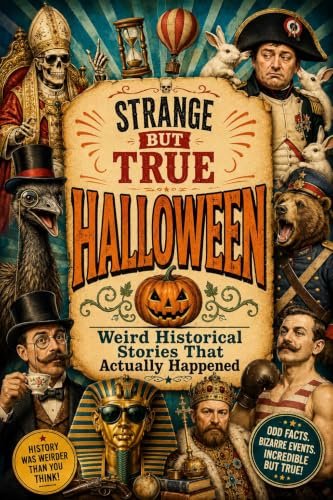
Halloween: Strange But True, by SparkTrail Press and Guy Wann, follows the holiday through ghosts, witches, costumes, candy, strange celebrations, and traditions that survived by changing their clothes every few centuries. It is the story of how a dark night at the edge of winter became a glowing orange festival with a chocolate distribution network.
The Night Was Supposed to Feel Uncomfortable
In the old Irish calendar, Samhain marked the beginning of winter. It arrived when harvest work was ending, daylight was shrinking, and the landscape looked ready to close for the season. Traditions connected the night with the dead, wandering beings, household protection, bonfires, feasting, and the uneasy border between one part of the year and the next.
Christian observances added All Saints’ Day and All Souls’ Day to the seasonal mixture. The evening before All Saints became All Hallows’ Eve, which eventually became Halloween. The result was not a single tradition with one tidy inventor. It was a long cultural stew in which remembrance, religion, fear, food, weather, and local folklore kept borrowing each other’s ingredients.
The First Lanterns Were Root Vegetables With Anger Issues
Before pumpkins became the smiling celebrities of American porches, people in Ireland and Britain carved turnips and other root vegetables. A hollowed turnip with a candle inside produces a face that looks less like autumn decoration and more like a furious ancestor who has returned to discuss the condition of the farm.
These lanterns were connected with spirits, protection, frightening neighbors, and stories such as the wandering figure of Stingy Jack. Irish and Scottish immigrants found pumpkins in North America and discovered that they were larger, softer, easier to carve, and far less likely to resist the knife like a damp cannonball. The jack o’ lantern had finally found a vegetable willing to cooperate.
Costumes Were Camouflage Before They Were Commerce
Disguise has deep roots in Halloween customs. Masks and strange clothing could confuse spirits, imitate them, frighten them, or give ordinary people permission to behave unusually for one night. In Ireland and Scotland, guisers traveled from house to house in costume and performed songs, poems, jokes, or tricks in exchange for food and small gifts.
This arrangement required effort. A child could not simply appear as a sheet with eyeholes and expect premium baked goods. Entertainment was part of the bargain. Modern trick or treating kept the costume and reward but streamlined the performance into a short phrase. This is either cultural evolution or excellent labor negotiation by children.
Halloween Once Offered Extremely Unreliable Dating Services
Many old Halloween games were less interested in ghosts than marriage. Young people used food, objects, nuts, mirrors, cabbage stalks, and bowls to predict whom they might marry and whether the future would be prosperous. In Ireland, barmbrack could contain hidden objects, with a ring promising marriage and other items delivering forecasts nobody wanted with dessert.
Another game involved pulling a cabbage from the ground and judging a future spouse by its size, shape, and roots. This raises several questions about the historical dating pool, but it did give participants immediate information. Today an app may take weeks to reveal incompatibility. A muddy cabbage could apparently settle the matter before supper.
American Pranksters Made the Trick Part Quite Literal
Halloween in nineteenth and early twentieth century America could be a civic nuisance. Young people removed gates, blocked roads, switched signs, soaped windows, upset outdoor privies, and relocated objects that had been perfectly happy where their owners left them. The evening sometimes became less a holiday than an annual test of whether the town had secured every loose item.
Community parties, school events, costume parades, and organized door to door visiting helped redirect the chaos. Offering treats was a practical peace treaty. Give the small masked delegation something desirable, and perhaps the front gate would remain attached to the property. The phrase “trick or treat” sounded playful, but early homeowners understood the contract.
Candy Won Because It Was Convenient
Early trick or treat rewards included fruit, nuts, coins, cakes, homemade sweets, and small toys. After wartime sugar rationing ended, commercial candy became increasingly important. Individually wrapped pieces were inexpensive, easy to distribute, simple to count, and less likely to create an awkward conversation about the mysterious cookie from the unfamiliar house.
By the later twentieth century, packaged candy dominated the bowl. It also inspired recurring fears about poisoned treats and hidden razor blades. Sensible inspection remains wise, but the image of random strangers systematically turning candy into weapons has been driven far more by rumor and rare cases than by a nationwide army of criminal confectioners.
The Ghosts Never Really Left
Halloween changed from a night of seasonal danger into a commercial celebration, but the old cast remained. Ghosts still cross thresholds. Witches still fly. Black cats, fortune tellers, skeletons, bonfires, masks, and haunted stories return every year. Even the candy ritual preserves the ancient idea that visitors arrive after dark and must be given food before everyone can relax.
Halloween: Strange But True collects the bizarre history behind those familiar decorations. It follows ancient customs, mischievous traditions, supernatural beliefs, dangerous celebrations, candy panics, and the odd decisions that built the modern holiday. The book is for readers who enjoy Halloween and would like to know why it contains so many turnips, ghosts, marriage predictions, and carefully wrapped peanut butter cups.
Explore more real history that sounds invented on the SparkTrail Strange But True series page, or browse the complete SparkTrail Press book catalog.