Naples Has a Volcano, a Pizza Legend, and No Interest in Being Normal
Southern Italy appears to have been designed by someone who considered flat ground a disappointing lack of ambition. Naples sits beneath a volcano, ancient cities wait under layers of ash, islands rise from blue water, and the Amalfi Coast hangs villages from cliffs as if gravity were merely a suggestion. The scenery is magnificent. The logistics occasionally feel like a practical joke with lemons.
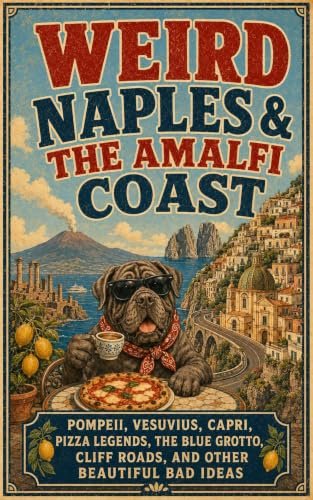
WEIRD NAPLES & THE AMALFI COAST: Pompeii, Vesuvius, Capri, Pizza Legends, the Blue Grotto, Cliff Roads, and Other Beautiful Bad Ideas, by SparkTrail Press and Guy Wann, explores the history, legends, food, ruins, tunnels, saints, islands, and spectacularly complicated travel of Campania. It is for readers who want the famous views but also want to know why skulls were adopted, blood is expected to liquefy, emperors escaped to islands, and buses keep meeting each other on roads apparently built for one determined goat.
Naples Has Several Cities Underneath It
Modern Naples is loud, crowded, energetic, and built on top of earlier versions of itself. Beneath the streets are ancient Greek and Roman spaces, aqueducts, cisterns, quarries, shelters, tunnels, and chambers that reveal how often the city has reused its own underground. Some spaces served practical purposes for centuries, then became wartime shelters or disappeared from daily life. A guided underground tour adds useful context because a dark passage is much more interesting when somebody can explain which civilization dug it and why.
The Skulls Had Friends
Naples has a long, complicated relationship with death and devotion. In places such as the Fontanelle Cemetery, anonymous human remains became connected to a local tradition in which people cared for particular skulls and prayed for the souls associated with them. The practice mixed faith, folk belief, hope, and an unusually personal approach to the afterlife. Visitors should treat such places as sacred cultural sites, not spooky props. The atmosphere provides enough drama without anyone needing to pose like they have discovered a pirate movie.
Pompeii Is Much Larger Than Your Schedule
Pompeii is often treated as a quick stop, but the archaeological city is vast. Streets, houses, shops, public buildings, baths, temples, theaters, wall paintings, and ordinary household details make the disaster feel disturbingly immediate. Comfortable shoes, water, sun protection, and several hours are sensible minimum equipment. Herculaneum is smaller but remarkably preserved, and its buildings can feel more intimate. Trying to visit both ruins, climb Vesuvius, eat a proper lunch, and return for evening plans is possible only if the plan includes becoming exhausted in four historically significant locations.
Vesuvius Is Still in the Room
Mount Vesuvius dominates the landscape visually and historically. Its eruption in AD 79 buried Pompeii and overwhelmed nearby communities, but the mountain is not merely an ancient exhibit. It remains an active volcano watched closely by scientists and surrounded by a heavily populated region. Visitors can reach designated access points and walk toward the crater, but conditions, entry rules, and transportation change. Check official information before leaving, bring sturdy shoes, and remember that volcanic slopes have very little sympathy for sandals chosen because they looked Italian.
Pizza Became Naples’ Most Successful Ambassador
Naples did not invent every form of flatbread, but it transformed simple dough, tomatoes, cheese, heat, and technique into a food recognized everywhere. Stories surrounding pizza Margherita, royal approval, street food, and legendary pizzerias have become part history and part civic mythology. The best approach is to enjoy the argument without demanding that one restaurant settle it forever. Eat more than one pizza, notice the soft center and blistered crust, and accept that a meal this simple has inspired enough rules and opinions to operate a small government.
The Amalfi Coast Is Beauty With Stairs
Positano, Amalfi, Ravello, Vietri sul Mare, and the smaller coastal towns deliver sea views, tiled churches, gardens, beaches, lemon terraces, narrow lanes, and an astonishing number of steps. The coast is not one compact attraction. Towns are separated by winding roads, ferries, hills, and traffic that can turn a short distance into an afternoon commitment. Choose a few places rather than collecting every town like a stamp. Ferries can offer gorgeous views when weather and seasonal service cooperate, while buses reward patience and a willingness not to study the cliff edge too closely.
Capri Adds Emperors, Sirens, and a Blue Cave
Capri has attracted Roman emperors, writers, artists, celebrities, and day-trippers who all arrived with different definitions of escape. The island combines dramatic cliffs, villas, lanes, gardens, expensive cafés, and views that make reasonable people take too many photographs. The Blue Grotto depends on sea conditions and access procedures, so it should be treated as a possibility rather than the single point of the trip. Capri remains worth exploring even when the cave says no. An island with Roman ruins and the Faraglioni rocks does not need to apologize for the weather.
Do Not Turn Campania Into a Race
Naples makes a strong base for Pompeii, Herculaneum, Vesuvius, and island excursions, while Sorrento or a coastal town may suit travelers focused on the Amalfi Coast. Trains, ferries, buses, and private transfers each solve different problems, but none removes geography. Check schedules close to travel dates, reserve major sites when needed, and leave room for delays. Most importantly, give Naples itself real time. The historic center, waterfront, churches, markets, castles, food, museums, and underground spaces deserve more than the hours left over after a day trip.
Meet Italy’s Most Beautiful Complication
Weird Naples & the Amalfi Coast mixes Roman disaster, volcanic landscapes, strange traditions, pizza history, island legends, practical travel advice, and villages clinging stubbornly to cliffs. It is not a dry guide and does not pretend the region can be reduced to a perfect checklist. Campania is rewarding because beauty, history, noise, danger, devotion, food, and chaos keep occupying the same street.
Pack lightly. Wear comfortable shoes. Keep one eye on Vesuvius. It has been quiet for a while.
Take the beautiful bad idea
Read the Kindle edition or listen to the audiobook.
Keep exploring: Visit the SparkTrail Weird Europe series or browse all SparkTrail Press books.