Paris Is Beautiful. Paris Is Also Full of Bones.
Paris has spent centuries perfecting elegance. The boulevards are grand, the pastries are suspiciously attractive, and even the pigeons seem to believe they belong in an art film. Yet beneath that polished surface sits another Paris, one built from bones, revolution, superstition, hidden corridors, royal catastrophes, and enough dark history to keep a gargoyle interested.
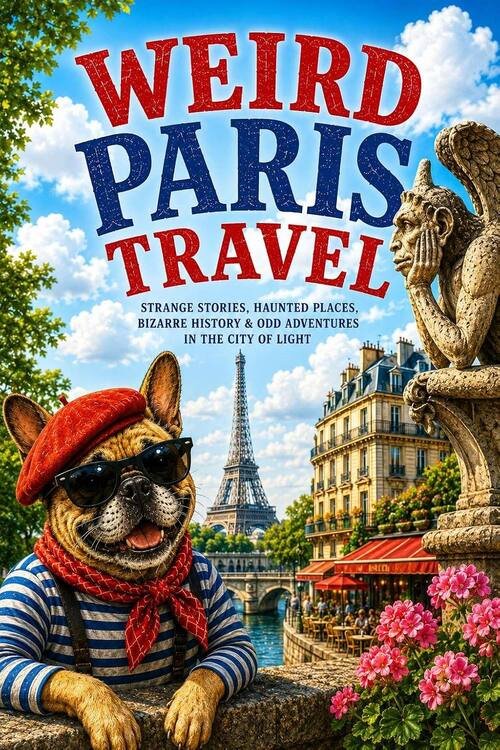
WEIRD PARIS TRAVEL: Catacombs, Guillotines, Ghosts, Gargoyles, Secret Passages, Stolen Bodies, and Other Extremely French Complications explores that other city. Written by SparkTrail Press and Guy Wann, it is for travelers who want the Eiffel Tower and the odd story behind it, Notre-Dame and the monsters watching from its roofline, the romantic streets and the unsettling things buried under them.
Six Million Neighbors Beneath Your Feet
The Paris Catacombs are the city’s most famous underground residents’ association. In the late eighteenth century, overflowing and unsanitary cemeteries had become a genuine public problem. Authorities began moving human remains into abandoned limestone quarries beneath the city. The result was an enormous underground ossuary containing the bones of millions of Parisians, arranged in walls that are both strangely artistic and impossible to forget.
A visit is fascinating, but it rewards planning. The public route is only a small part of the vast tunnel network, entry is timed, stairs are plentiful, and the ground can be damp and uneven. Wear sensible shoes, book ahead when possible, and do not expect a quick elevator ride back to daylight. The legal tour is eerie enough. The sealed tunnels explored by underground adventurers known as cataphiles are not an invitation to wander off with a phone flashlight and misplaced confidence.
Gargoyles, Grotesques, and Notre-Dame Drama
Notre-Dame is famous for soaring Gothic architecture, sacred history, and stone creatures that look as if they have just heard disappointing news about humanity. Technically, a gargoyle channels rainwater away from a building. A decorative monster without that plumbing job is a grotesque. Paris has plenty of both, because apparently medieval builders understood that every cathedral benefits from dramatic rooftop supervision.
The cathedral’s story reaches far beyond architecture. It survived revolution, neglect, reinvention, literary fame, and devastating fire. Its strange creatures also helped shape the popular image of haunted, medieval Paris. Look up when exploring the Île de la Cité. Paris rewards anyone willing to stop staring at a map for thirty seconds.
Revolution, Guillotines, and Royal Bad Decisions
The French Revolution transformed public squares into stages for political fury. The guillotine was promoted as a more equal and efficient form of execution, which may be history’s bleakest example of administrative optimism. Kings, queens, revolutionaries, and ordinary citizens were swept into a machine of fear that changed France and shocked Europe.
Place de la Concorde looks calm today, but it once witnessed the executions of Louis XVI, Marie Antoinette, and many others. The peaceful fountains and open sky make its violent past feel almost unreal. That contrast is part of what makes weird history so compelling. Paris does not separate beauty from disaster. It builds a traffic circle around both and carries on.
Secret Passages and a City Behind the City
Not every Paris secret is underground. The covered passages of the Right Bank form a quieter network of glass-roofed arcades filled with old shops, booksellers, cafés, mosaics, and traces of nineteenth-century life. They are excellent places to explore when rain arrives or when the giant attractions begin to feel like a competitive sport.
Passages such as Galerie Vivienne and Passage des Panoramas offer a different rhythm from the main boulevards. Walk slowly, notice the floors and shopfronts, and let curiosity choose a few turns. The reward is not one enormous monument. It is the feeling that you slipped through a side door into another version of Paris.
Père Lachaise: Fame, Folklore, and Very Long-Term Residents
Père Lachaise Cemetery is part sculpture garden, part history lesson, and part celebrity neighborhood with extremely strict quiet hours. Oscar Wilde, Édith Piaf, Jim Morrison, Frédéric Chopin, and many other notable figures are buried there. Elaborate tombs, weathered angels, family chapels, and winding paths create an atmosphere that can shift from peaceful to uncanny in a few steps.
Bring a map or use the cemetery’s posted guides, because the grounds are large and the paths do not care about your schedule. Treat the site as a cemetery first and an attraction second. Take photos respectfully, avoid climbing on monuments, and allow time to discover less-famous graves. The unexpected corners are often more memorable than the checklist names.
Montmartre After the Postcards
Montmartre has artists, cabarets, steep lanes, Sacré-Cœur, and enough legends to fill several late-night conversations. Its bohemian reputation was built by painters, performers, outsiders, hustlers, and dreamers who turned a hilltop neighborhood into a cultural myth. Behind the souvenir stands are old vineyards, hidden squares, peculiar statues, and streets that still feel like fragments of an earlier village.
Go early for calmer lanes, then return near evening when the neighborhood changes character. Explore beyond the busiest route between the Metro and Sacré-Cœur. The best Montmartre experience is not a straight march uphill. It is a wandering argument with gravity.
The Metro Has Stories Too
The Paris Metro is practical transportation wrapped in ironwork, tiled tunnels, abandoned stations, wartime history, and urban legends. Some stations have changed names, some platforms have closed, and others survive mostly in stories about ghost trains and forbidden spaces. You do not need to chase a phantom conductor to enjoy the weirdness. Notice the Art Nouveau entrances, station designs, old advertisements, and the sudden shifts between neighborhoods.
Keep tickets or digital passes accessible until the journey is finished, watch your belongings in crowded cars, and learn the direction of the final station on your line. That tiny bit of preparation prevents the classic Paris travel experience of confidently boarding the correct train in the wrong direction.
Meet the Paris the Normal Guidebook Avoids
Weird Paris Travel mixes dark history, strange legends, famous landmarks, practical itineraries, transportation help, and advice about common scams and tourist mistakes. It is not interested in replacing the beautiful version of Paris. It simply insists that the beautiful version becomes much more interesting once the bones, ghosts, scandals, monsters, and disasters are allowed back into the story.
Come for the cafés, architecture, and romance. Stay for the skulls, royal calamities, haunted streets, stolen bodies, and extremely French complications.
Choose your way into Weird Paris
Read it, listen to it, or pack the paperback for the journey.
Keep exploring: Visit the SparkTrail Weird Europe series or browse all SparkTrail Press books.