Coffee Was Banned, Smuggled, and Blamed on Dancing Goats
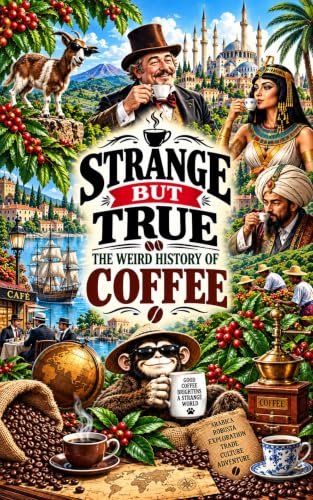
SparkTrail Strange But True
Dancing goats, coffeehouse riots, banned brews, smugglers, strange machines, caffeine addicts, and other bizarre stories from the world’s favorite cup.
Coffee begins most mornings as a quiet domestic agreement. A person drinks it, the brain returns to the building, and civilization is permitted to continue. Its history is considerably less calm. Coffee has been praised by mystics, banned by rulers, smuggled across borders, debated by doctors, served to revolutionaries, and forced through alarming brass machinery at high pressure.
Strange But True: The Weird History of Coffee follows the drink from legendary goats to modern cafés, pausing whenever humanity does something excessive, suspicious, or wonderfully caffeinated. That happens often.
The Goats May Have Started It
The most famous origin story introduces Kaldi, an Ethiopian goatherd who supposedly noticed his animals becoming unusually energetic after eating red berries. The goats danced. Kaldi investigated. Coffee entered history with the dignity of a barnyard talent show.
It is a delightful legend, not a reliable eyewitness report. Coffee’s earliest history is foggy, but the plant is associated with Ethiopia and the drink developed deep roots in Yemen. Sufi communities used coffee to stay alert during long religious observances. This was practical, spiritual, and much quieter than a herd of overexcited goats.
Coffeehouses Became the Internet With Chairs
Public coffeehouses spread through the Ottoman world and later through Europe. People arrived for a drink and stayed for news, arguments, business, gossip, poetry, games, and the pleasure of explaining complicated subjects to strangers who had not asked.
English coffeehouses became known as penny universities because the price of a cup could buy access to conversation and information. Particular houses attracted merchants, writers, scientists, politicians, or sailors. Lloyd’s Coffee House became a meeting place for shipping interests and helped produce the insurance market known today as Lloyd’s of London. Coffee did not merely wake people up. It gave them a table at which to reorganize commerce.
The King Tried to Close the Coffeehouses
In 1675, King Charles II issued a proclamation aimed at suppressing English coffeehouses. The official concern was not that the coffee tasted terrible. Authorities worried that the shops encouraged idleness, political criticism, false reports, and conversations that made the government nervous.
The plan caused such an uproar that it was withdrawn before the closures properly took effect. This established an important principle of public life: people will tolerate many royal decisions, but taking away their coffee while they are complaining about the king is ambitious.
Other rulers also viewed coffee with suspicion. Attempts to restrict it appeared in parts of the Islamic world and Europe. The beverage kept returning because people liked it, merchants profited from it, and a ban becomes difficult to enforce when half the city is hiding a pot.
Smuggling Beans in Extremely Personal Luggage
Yemen once worked hard to protect its valuable coffee trade. Beans leaving the region were often processed so they could not sprout. According to a famous Indian tradition, the Sufi pilgrim Baba Budan smuggled seven fertile beans out of Yemen and carried them home, with versions of the story placing the beans against his body or even in his beard.
The exact details belong to legend, but the larger struggle was real. European trading powers wanted living plants, not just roasted beans. The Dutch established cultivation in Java. French, Portuguese, and other colonial networks carried coffee across oceans. A morning beverage became tied to conquest, forced labor, plantation economies, and a global contest over who controlled the seeds.
Revolutionaries Needed Refills
Coffeehouses became meeting places in colonial America as well. Merchants traded information, printers circulated news, and political organizers discovered that rebellion goes more smoothly when everyone has somewhere to sit. After the Boston Tea Party, drinking coffee also gained patriotic symbolism, although tea did not instantly disappear and every colonist did not dramatically fling a teapot into the harbor.
During the American Civil War, coffee became a central part of soldiers’ daily routines. Men roasted, ground, and brewed beans whenever supplies allowed. Letters and diaries mention coffee with the emotional intensity normally reserved for family, home, and dry socks. A dependable cup could turn a miserable camp into a slightly more awake miserable camp.
Machines Made Coffee Faster and Stranger
By the nineteenth century, inventors were trying to make coffee faster for impatient customers. In 1884, Angelo Moriondo of Turin patented a steam powered machine designed to produce coffee quickly in bulk. Luigi Bezzera later developed a machine that brewed directly into individual cups, and Desiderio Pavoni helped commercialize the idea.
Early machines were enormous, hot, temperamental monuments to pressure. They looked less like kitchen appliances and more like equipment that might launch a small submarine. Eventually, levers and pumps produced the concentrated drink and creamy surface associated with modern espresso. The espresso bar transformed coffee from something slowly prepared into something performed.
Coffee Panic Never Goes Out of Style
For centuries, coffee has attracted medical claims ranging from miraculous to apocalyptic. It has been accused of causing weakness, rebellion, infertility, nervous collapse, and bad manners. It has also been advertised as a cure for nearly everything short of running out of coffee.
Modern research is more careful, and individual tolerance varies. The sensible lesson is less exciting than the old pamphlets: caffeine affects people differently, serving sizes matter, and a sweet drink the size of a flower vase is not nutritionally identical to plain coffee. History prefers screaming. Reality usually reads the label.
How to Taste the History in Your Cup
You do not need a laboratory or a solemn expression to notice what makes coffee different. Compare two beans brewed the same way. Smell before sipping. Notice acidity, bitterness, sweetness, body, and whether the flavor reminds you of chocolate, nuts, fruit, spice, or the office break room after a difficult meeting.
Try coffee from Ethiopia, Yemen, Java, or the Americas and look into how each region became part of the trade. Ask when the beans were roasted. Grind them close to brewing if practical. Most importantly, drink what you enjoy. Coffee already survived kings, smugglers, wars, colonial empires, and steam machines. It does not need anyone glaring at you for adding milk.
Pour Another Strange Cup
Strange But True: The Weird History of Coffee by SparkTrail Press and Guy Wann serves the full story with the facts, legends, inventions, riots, and wonderfully jittery decisions left in. Explore more unbelievable history in the SparkTrail Strange But True series, or browse the complete SparkTrail Press book catalog.
Choose your coffee history fix
Read on KindleListen to the AudiobookGet the PaperbackGet the Hardcover