America Hid Diamonds, Fossils, and Treasure in Plain Sight
America is full of treasure. Unfortunately, most of it is not sitting in an unlocked pirate chest beside a convenient parking lot. It is hiding in Arkansas dirt, Utah desert, Oregon lava country, mountain streams, fossil beds, beaches, and places where the official instructions often begin with a cheerful reminder not to bring explosives.
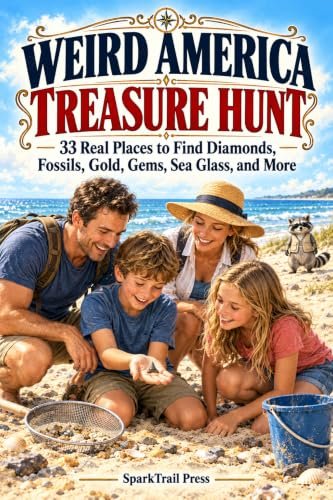
Weird America Treasure Hunt: 33 Real Places to Find Diamonds, Fossils, Gold, Gems, Sea Glass, and More turns that wonderfully impractical dream into a real travel plan. These are places where families, rockhounds, collectors, and determined people with muddy knees can search for something worth taking home. The prize might also be a very attractive rock that only you understand. That counts.
Yes, you can really hunt for diamonds
Crater of Diamonds State Park in Arkansas is the great American answer to anyone who says treasure hunting is only for movies. Visitors search a plowed field over an ancient volcanic site, and the park allows finders to keep the diamonds they discover. Visitors leave with a story, dirty shoes, and strong opinions about every shiny speck.
The smartest approach is patience rather than frantic digging. Walk slowly after rain, when washed surfaces can make small stones easier to notice. Learn what an uncut diamond actually looks like before arriving. Check current hours, fees, weather, and tool rules before making the trip.
The West scattered gemstones everywhere
Public lands across the West contain designated rockhounding areas where visitors may search for sunstones, garnets, geodes, topaz, agate, and other geological prizes. Oregon has a public sunstone collection area. Nevada has Garnet Hill. Utah has the Dugway Geode Beds and Topaz Mountain. California has geode and mineral collecting areas that sound as if someone named them while holding a treasure map.
This does not mean every patch of desert is a free gemstone buffet. Active mining claims, private land, developed recreation sites, wilderness restrictions, and local closures can change what is legal. Use official maps, confirm land ownership, and contact the managing office before leaving home. A rock is less charming when it arrives with a trespassing complaint.
Bring eye protection, gloves, water, sturdy shoes, sun protection, and tools permitted at that specific site. Label each specimen. Months later, “reddish rock from somewhere west of a gas station” is not useful documentation.
Gold panning is mostly water, gravel, and optimism
Gold rush history makes panning look like a dramatic sequence in which a prospector swirls the pan twice, shouts, and buys a saloon. Real panning asks for more patience. Water and motion wash away lighter material while heavier particles settle. The tiny flash that remains may be gold, mica, or the sun playing a joke.
Many public and commercial locations welcome beginners, and commercial sites can be especially friendly for families because equipment, instruction, and clearly defined collecting rules are available. On public land, verify whether the stream is open, whether a claim exists, and which tools are allowed. Small-scale recreational panning may be permitted where larger disturbances are not. Fill any holes, leave banks intact, and avoid turning a peaceful creek into a miniature open-pit mine.
Fossils come with a rulebook
Fossil hunting offers the special thrill of finding something that has been waiting millions of years for you to stop scrolling and look down. Common plant and invertebrate fossils can sometimes be collected in reasonable amounts on certain federal lands. Vertebrate fossils, including bones from dinosaurs, reptiles, fish, birds, and mammals, generally cannot be casually taken from federal land.
A fossil that may be collected at a commercial quarry could be protected at a national park or monument. Some fee-dig sites provide tools, splitting stations, and staff who can help identify finds. They are excellent starting points because the permission question is already answered. At protected sites, photographs are the treasure. Leave the fossil exactly where it is and tell a ranger if the find seems significant.
Sea glass is treasure polished by bad housekeeping
Sea glass begins as discarded glass and ends as a smooth little jewel after years of tumbling in sand and surf. It is recycling performed by waves with an extremely slow delivery schedule. Colors can hint at an object’s past, from common bottles to older tableware or maritime debris.
Search along the high-tide line after storms, but never turn your back on the ocean. Wear shoes, avoid unstable cliffs, and check local rules. Some beaches allow collecting while protected shorelines forbid removing natural or cultural material. Also learn the difference between sea glass and freshly broken glass. One is a keepsake. The other is an urgent reason to stop reaching into the sand.
The best treasure hunters do homework first
A successful trip begins before the shovel enters the car. Check the land manager’s current website, call when rules are unclear, and confirm seasonal access. Download maps because cell service has an impressive habit of disappearing exactly when two dirt roads become six. Bring containers, labels, a magnifier, a field guide, and plenty of water.
Set expectations honestly with children and adults. Treasure hunting is searching, not guaranteed shopping. Make the day about geology, local history, and the ridiculous objects people once mistook for riches. Celebrate small finds. A pocket-size fossil or oddly perfect agate can carry more memory than something expensive behind glass.
Keep the treasure hunt legal and kind
Federal agencies generally allow limited collecting of common rocks and minerals for personal, noncommercial use in appropriate areas, but the exact rules depend on location and material. Mechanical equipment, major digging, commercial collecting, cultural artifacts, and protected fossils are different matters. Never disturb archaeological objects, historic sites, graves, or sacred places. If an item looks human-made and old, leave it and report it.
Good treasure hunters fill holes, pack out litter, take reasonable amounts, and leave enough for the next curious traveler. The goal is to return with a specimen and a story, not evidence that a small bulldozer developed a rock obsession.
Start planning your strange American treasure hunt
Weird America Treasure Hunt visits 33 real places where diamonds, fossils, gold, gems, sea glass, and other discoveries turn an ordinary road trip into a search mission. It blends practical preparation with the strange histories, lucky finds, false alarms, and beautiful landscapes that make the hunt worthwhile.
Explore more unusual destinations in the SparkTrail Weird America series, or browse the full SparkTrail Press book catalog. Bring curiosity, follow the rules, and remember that every treasure hunter eventually spends ten minutes admiring a wet piece of quartz.