London Put Ravens in a Fortress and a Philosopher in a Glass Case

London has spent nearly two thousand years building on top of itself, arguing with itself, burning down, rebuilding, and quietly placing cafés beside tombstones. The result is a city where a Roman temple sits beneath a modern office, royal ravens guard a fortress, abandoned train platforms hide behind ordinary station walls, and a dead philosopher continues to occupy valuable university space.
Plan your Tower of London visit around the history
The raven story is a tradition, not evidence that birds determine the future of the monarchy. Historic Royal Palaces describes the warning about the ravens leaving as a legend. Keeping that distinction clear makes the actual history easier to appreciate.
Before building your day around a particular attraction, check the official visitor information. Leave time for the grounds as well as the exhibitions, and do not feed or approach the ravens closely.
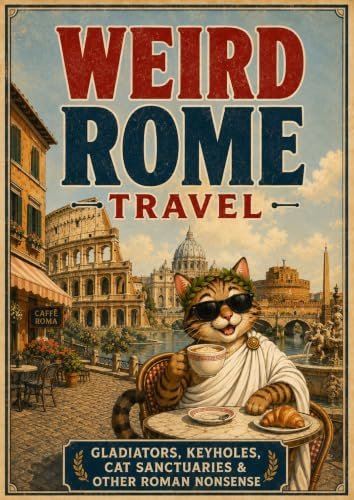
Weird London Travel: Graveyard Cafés, Roman Walls, Royal Ravens, Ghost Stations, Dead Philosophers, and Other Perfectly British Complications explores the capital beyond the standard checklist. Big Ben and Buckingham Palace are still there, behaving respectably for photographs. The stranger London is underneath, behind, and occasionally inside a glass case.
The Tower hired ravens to protect the kingdom
The Tower of London already has enough history for several nervous countries. It served as fortress, palace, prison, execution site, armoury, mint, and home to the Crown Jewels. Then there are the ravens. Legend says the Tower and kingdom will fall if the resident birds ever leave, so tradition requires at least six to remain. London has therefore placed national security in the claws of large, intelligent birds that can mimic sounds, solve problems, and bite visitors who ignore instructions.
The ravens live on the Tower grounds under professional care, and meeting them is included with standard admission. Do not feed them. Arrive early, allow at least three hours for a proper visit, and expect cobbles, bag checks, and queues. A Yeoman Warder tour is included and adds the sort of cheerful stories about imprisonment and execution that Britain presents remarkably well before lunch.
Roman London refuses to stay buried
London began as Londinium, a Roman settlement beside the Thames. The Romans eventually surrounded it with a huge defensive wall, parts of which still interrupt the modern city like ancient masonry that missed the demolition notice. Visible sections can be found near Tower Hill and around the Barbican, making a useful walking route through the oldest part of London.
The Roman amphitheatre beneath Guildhall Art Gallery is another excellent surprise. Visitors descend below a respectable civic building and discover the outline of an arena once used for public entertainment. Admission to the gallery and amphitheatre is free, although checking current hours and booking guidance is sensible.
For maximum historical whiplash, visit London Mithraeum beneath Bloomberg’s European headquarters. The reconstructed remains of a temple to the god Mithras sit below one of the world’s great financial districts. It is free, booking is recommended, and the dim light, mist, and sound create a suitably mysterious atmosphere. Roman religion beneath an office block feels less like an accident than London showing off.
The Underground has rooms it no longer admits to
The Tube is a working transport system, an engineering marvel, and a maze that occasionally makes visitors question whether northbound is a philosophical concept. Behind the active network are disused stations, forgotten lift shafts, abandoned platforms, wartime shelters, and tunnels that survive out of public view.
London Transport Museum runs ticketed Hidden London tours at selected locations. Depending on the programme, visitors may explore the closed Aldwych station, hidden sections of Baker Street, disused Jubilee line platforms at Charing Cross, or the deep-level shelter at Clapham South. These are guided experiences with limited places, so book well ahead and check age, footwear, mobility, and access requirements. Secret London is much less secret once everyone arrives late wearing unsuitable sandals.
For an easier underground adventure, ride Mail Rail at the Postal Museum. The miniature railway once carried mail beneath London for up to 22 hours a day. Today, visitors can board a small train through original tunnels and platforms. The carriages are compact, so review the access information before booking if enclosed spaces or mobility are concerns.
Lunch is served among the tombstones
At St Martin-in-the-Fields beside Trafalgar Square, the Café in the Crypt offers food beneath brick vaults, with historic tombstones set into the floor. It is atmospheric, central, and a memorable answer to the question, “Where should we stop for soup?” London does not see why lunch and mortality need separate rooms.
Opening hours vary with concerts and events, so check the daily schedule. The location works especially well between the National Gallery, Covent Garden, and the river. It also provides shelter when London delivers rain from several directions at once.
Jeremy Bentham is still at university
University College London displays the Auto-Icon of philosopher Jeremy Bentham in its Student Centre. The figure contains Bentham’s preserved skeleton, dressed in his own clothes and topped with a wax head. Bentham requested this unusual arrangement before his death in 1832. Most thinkers hope their ideas will remain on campus. Bentham took the instruction literally.
A popular legend claims the Auto-Icon attends university meetings, but UCL identifies that as a myth. The real display is strange enough without assistance. Visitors can see it in a glass case on Gordon Square, but should confirm public access hours before going. It is a short detour from the British Museum and an excellent reminder that London treats eccentricity as a renewable resource.
Use the Tube without creating your own ghost station
Contactless payment or an Oyster card makes travel simple. Use the same physical card or device every time you touch in and out, because a phone, watch, and bank card linked to the same account still count as different payment methods. Switching halfway through can produce maximum fares and the sudden discovery that technology has opinions.
Walk when sights are close. The distance between Tube stations in central London can be surprisingly short, and street level is where the odd details live. Group nearby places into one area each day, carry a small umbrella, and leave room in the schedule for alleys, plaques, churches, and museums that were not on the original plan.
Meet the London hiding behind the postcard
Weird London Travel follows Roman walls, royal disasters, strange museums, ghost stations, graveyards, ravens, hidden passages, and wonderfully British complications. It is designed for curious travelers who want famous landmarks plus the stories that make those landmarks far more entertaining.
Discover more offbeat journeys in the SparkTrail Weird Europe series, or browse the complete SparkTrail Press catalog. London will supply the history. It may also supply rain, a raven with boundary issues, and a train platform that officially no longer exists.